ALL IMPLANT PATHS · ONE TEAM
Your implant journey
- Single tooth, multiple teeth, or full arch — one approach per situation
- Bone grafting available — options for patients told "no" elsewhere
- One dentist, planning to final tooth — no hand-offs









Who Is a Candidate for Dental Implants?
Dental implants are for people with a missing tooth, several missing teeth, or a full arch that’s failing — who want something fixed, not something that comes out at night. They’re also for people who’ve worn a denture for years and are done with the movement, the adhesive, and the self-consciousness.
If you’re down one tooth or down most of them, there’s an implant approach designed around your situation. The honest qualifier is always bone and gum health — whether you’re a candidate today, or need a step first like bone grafting, is something Dr. Tarek tells you straight at the consult. Not every patient is ready on day one; some need preparation, and that’s a real answer, not a problem.
The patients who benefit most aren’t always the simplest cases. Dr. Tarek has rebuilt full arches for patients told “no” elsewhere — usually because bone grafting wasn’t an option where they were seen. If you’ve had a second opinion that disappointed you, it’s worth a second look here.
Implant Options at Westlake: Single Tooth, Multiple Teeth, and Full Arch
One tooth, several, or a full arch — there's an approach matched to your situation.
There isn’t one implant — there are several approaches, each matched to a different situation.
Single Tooth Implant. One missing tooth replaced with one implant and one crown — the most common implant procedure and the most direct way to fill a gap without touching the teeth next to it.
Multiple Implants. Two or more missing teeth replaced with individual implants or an implant-supported bridge, depending on where the gaps are and how the bone looks.
Full-Arch Implants — All-on-4, All-on-X, Zirconia. For patients missing most or all of a jaw’s teeth, a fixed set supported by four or more implants — no denture, no removing them at night. Read the full-arch decision guide, the All-on-4 procedure detail, or zirconia material explained. The right option depends on your bone, your bite, and what you want the final teeth to feel like — Dr. Tarek matches the approach to your mouth, not the other way around.
The Implant Process: From Consultation to Final Crown
Consultation, surgery, healing, final crown
1. Consultation and 3D scan. Dr. Tarek scans your bone, reviews your health history, and maps out what your case needs — including whether you need bone grafting first. You leave with a real plan and a real number.
2. Surgery. The implant (a titanium post) is placed in the jawbone where the tooth root used to be. Many single-tooth cases are a straightforward outpatient procedure. Full-arch cases are more involved — failing teeth come out, implants go in, and in many cases a fixed temporary arch goes in the same day.
3. Healing and integration. The implant fuses with the bone over a period of months (osseointegration) — what makes the implant stable for the long term. You’re functional on a temporary crown or arch during this phase.
4. Final crown or arch. Once integrated and healed, we place the final tooth or set of teeth, fitted to your bite. Most single-tooth cases run a few months; full-arch timelines are longer and depend on grafting and healing. Actual timeline depends on your specific case.
How Much Do Dental Implants Cost in Sterling, VA?
The honest answer is that cost depends on the case — how many teeth, whether you need bone grafting, and what the final restoration looks like.
A single-tooth implant typically costs more than a bridge short-term but avoids the long-term cost of replacing adjacent teeth — most patients who do the math consider it the better investment over ten years. Multiple implants scale with the number of teeth and the bone situation. Full-arch treatment is the most significant investment; it replaces an entire jaw’s worth of teeth and is typically a once-in-a-lifetime procedure.
Two things drive cost variability most: whether bone grafting is needed, and the material of the final teeth (zirconia costs more than acrylic and lasts longer). We offer monthly payment plans and work with major financing partners — see the implant financing guide. Full-arch work includes a 5-year warranty on material failure for patients who complete the recommended 6-month Care & Cleaning visits; it does not cover patients who smoke, patients with uncontrolled diabetes, or patients who skip the follow-up schedule. Estimates vary; we provide a detailed quote after assessment.
- All-on-4 — four implants, full fixed arch, often same-day temporaries
- All-on-X — more implants for extra support or heavier bite load
- Zirconia full arch — the most durable, natural-looking final material
Financing: Monthly Plans That Make Implants Manageable
Full-arch implant treatment is a real investment. Single and multiple implants are meaningful too. Most patients don’t write a check for the whole thing — they plan around a monthly payment they can actually manage.
At Westlake we work with major third-party financing partners and offer options that can spread the cost across months or years. Whether you’re looking at one tooth or a full arch, the consult includes a real number and a payment breakdown — not a rough estimate that changes later. For the full breakdown — monthly framing, insurance, third-party options — read Dental Implant Financing in Sterling, VA.
- Anesthesia. To start the process, you will be put under anesthesia. This is so that you will not feel any pain throughout the procedure, and can lay comfortably without being anxious.
- Teeth removal. Some patients will already have their teeth missing. However, for those individuals that need a few teeth removed before the implants can be put in, this is the next step.
- The incision. An incision will now be made where the titanium alloy screws will go. Typically, a dentist will put two screws in the front of the mouth, and 2 screws (1 on each side) in the back. This guarantees good stability.
- Screwing the implants in. The screws will then be put into their appropriate spot. Here, they will begin to fuse with your jawbone over the span of a couple of months.
- Crown implementation. Once the healing process has come to an end, your dentist will put on permanent, porcelain crowns. This will cover up the titanium alloy rods and look similar to your natural teeth! When it comes to all-on-4 treatment, many crowns may be connected and all supported by a single titanium alloy rod.
Why Choose Dr. Tarek for Dental Implants
Dr. Tarek Badawy has been placing implants at Westlake Dental in Sterling since 2019, and his implant training goes back further — eight of twelve months of his one-year surgical residency were spent in oral surgery. He holds a Fellowship from the ICOI (International Congress of Oral Implantologists), a dedicated implant credential, and is a Fellow of the Academy of General Dentistry (FAGD).
He plans and places these cases himself. You’re not handed off to a different surgeon for the implant and back for the crown — the same dentist sees your case through from first scan to final tooth. That includes bone grafting, which means patients told “no” elsewhere because grafting wasn’t available have a real option here. As a board member of the Alliance of Independent Dentists, he runs an independent practice — cases are planned around your mouth, not a production schedule.
Dr. Tarek works with TRI (Swiss-made, engineered without a separate abutment), BioHorizons (American-made; the only system with Laser-Lok technology, clinically shown to support soft-tissue attachment directly to the implant), and Nobel Pearl (all-ceramic, for patients with a thin tissue biotype where ceramic contributes to better gum health and long-term appearance). He matches the system to your anatomy at the consult.
Missing most of your teeth? The Full Mouth Dental Implants guide covers All-on-4, All-on-X, zirconia, teeth-in-a-day, timeline, financing, and a full-arch FAQ in depth. The consult is a conversation, not a sales pitch — Dr. Tarek looks at your scans, walks through options, and gives you real numbers. Results vary based on individual factors. Westlake Dental · Sterling, VA · Free consult.
Dental implants, explained
Dental Implant Questions, Answered
Age alone is rarely the deciding factor. What matters is bone density, overall health, and whether conditions like diabetes or gum disease are managed. Many patients in their 60s, 70s, and 80s are good candidates. Dr. Tarek evaluates your specific situation — not a demographic cutoff — at the consult.
Implants are designed to be long-lasting. The titanium post that integrates with the bone typically holds for many years, often decades, when placed on a healthy foundation and maintained with regular care. The crown on top may need replacement sooner, similar to any dental crown. Results vary based on individual factors, including home care and follow-up.
The surgery is done with local anesthesia, so patients typically feel pressure but not sharp discomfort during the procedure. Soreness and swelling in the days after are common and managed with medication Dr. Tarek prescribes. Most patients describe recovery as more manageable than expected. Individual experience varies.
Cost depends on how many teeth, whether bone grafting is needed, and the final restoration type. We offer monthly payment plans and work with major financing partners so the cost can be spread over time. We give you a specific number at the consult — not an estimate that changes later. Estimates vary; we provide detailed quotes after assessment.
Bone grafting. Dr. Tarek performs bone grafts at Westlake, which means patients turned away elsewhere for lack of bone density have an option here. Grafting adds healing time before the implant is placed, but it's often what makes an implant possible when it otherwise wouldn't be.
A bridge fills a gap by crowning the teeth on either side and suspending a false tooth between them — it requires modifying healthy teeth. An implant fills the gap with its own root and crown, leaving neighboring teeth untouched. The implant tends to be the better long-term investment because it preserves adjacent tooth structure and maintains bone density. Short-term cost is higher; long-term cost is often lower.
In some cases an implant can be placed the same day as an extraction — immediate placement — when the socket and surrounding bone are healthy enough. Other cases need a healing period first. Dr. Tarek assesses this during planning. Same-day placement following extraction is possible for many patients, but not all.
I’ve had excellent care for years. Dr. T is great at explaining everything, making it less stressful, and making sure you feel comfortable. Everyone is friendly and service is prompt. I would recommend Westlake Dental Care to anyone.
– Margie W.
Potomac Falls, VA
Ready to Find Out If You're a Candidate?
Free consultation. Real numbers. No pressure.
OUR BLOG
Learn About Dental Health and Our Practice
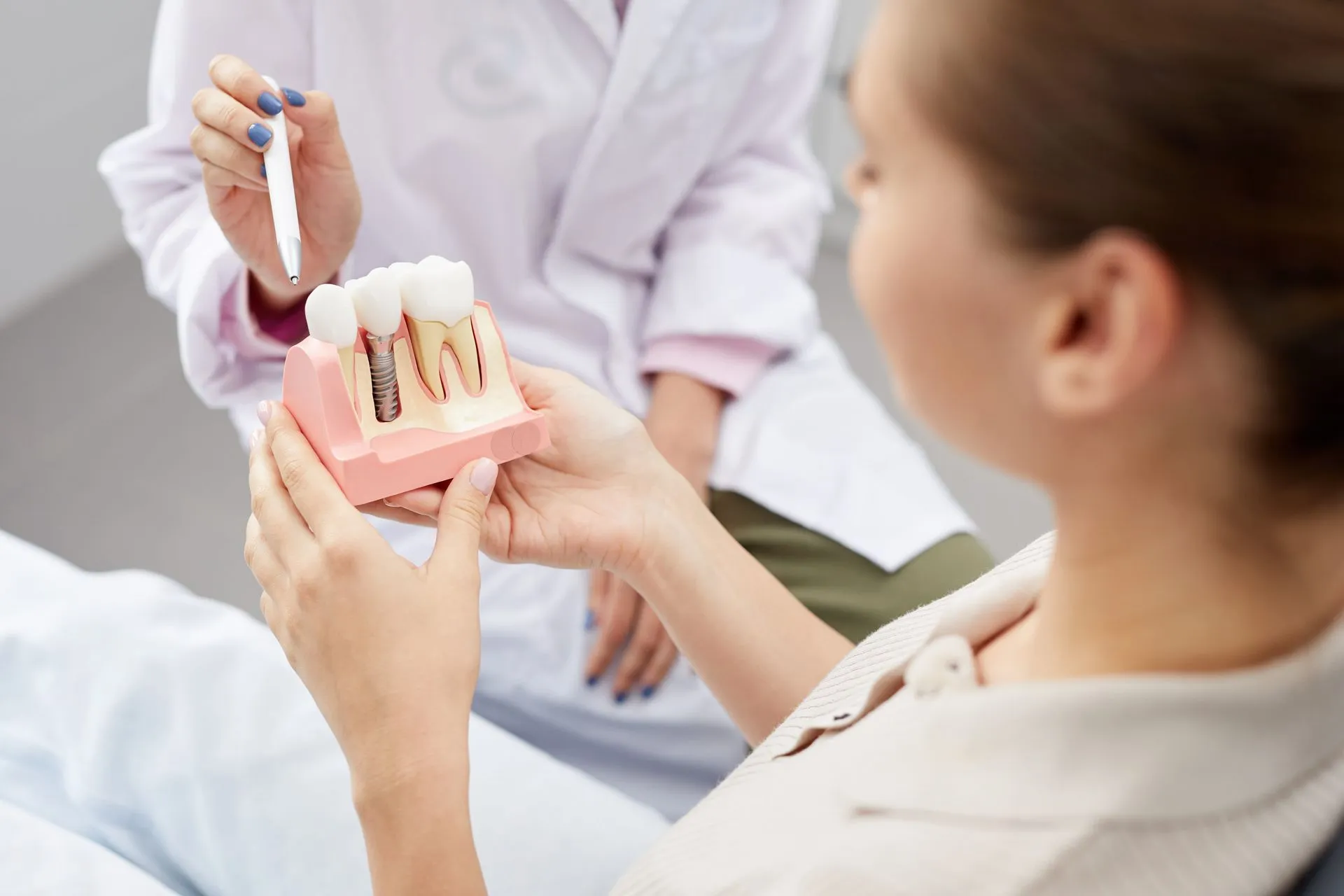
When it comes to replacing missing teeth, you have several options to consider. Two of the most popular choices are […]
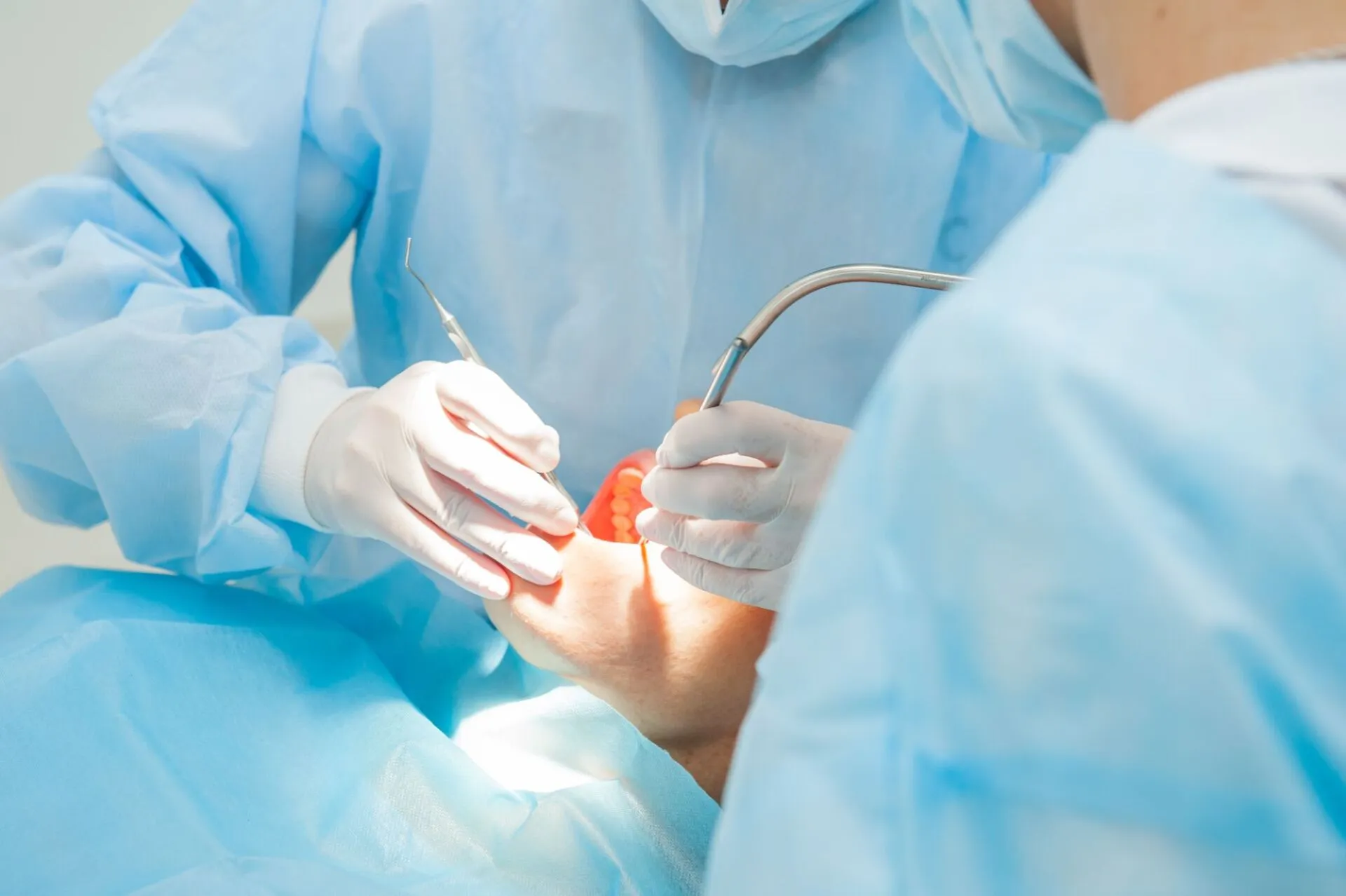
Dental implants have become the go-to solution for replacing missing teeth, offering unparalleled durability, functionality, and aesthetics. However, many patients […]

Dental implants can be a significant investment, so most patients want them to last as long as possible and keep them […]