EAT · LAUGH · LIVE UNGUARDED
All-on-4 confidence
- Four implants support a full fixed arch — no removal, no adhesive
- Many patients leave the same day with teeth
- Designed to work even after some bone loss









What Is All-on-4 and How Does It Work?
Four implants anchor a fixed arch of teeth. Two upright in front, two angled in back — the angle engages more bone, no separate implant per tooth needed.
- Fixed. Don’t remove them to sleep. No adhesive.
- Eat + talk + function like natural teeth — anchored to bone, not resting on gum.
- Often one-day surgery. Remove failing teeth, place 4 implants, fit a temporary arch the same visit. You leave with teeth.
- Final arch (usually zirconia) replaces temporary once implants integrate — typically 3-6 months.
All-on-4 vs. Traditional Dentures — The Honest Side-by-Side
Stability, bone preservation, daily life, and long-term cost.
Most All-on-4 patients are deciding between a denture and something fixed. Here’s what’s different.
- Stability. Dentures slip when you chew or laugh — they rest on gum. All-on-4 is anchored in bone. It doesn’t move.
- Bone loss. Dentures don’t stop resorption — jawbone shrinks, fit gets worse. Implants act like roots and slow that loss.
- Eating freely. Denture wearers avoid hard/crunchy/sticky food. All-on-4 patients eat without thinking about it.
- Long-term cost. Dentures cost less up-front but need re-fits and replacement. All-on-4 is a larger investment designed to last with good maintenance.
Same-Day Restoration
All-on-4 vs. All-on-X: The Difference in Plain Terms
When more implants make sense
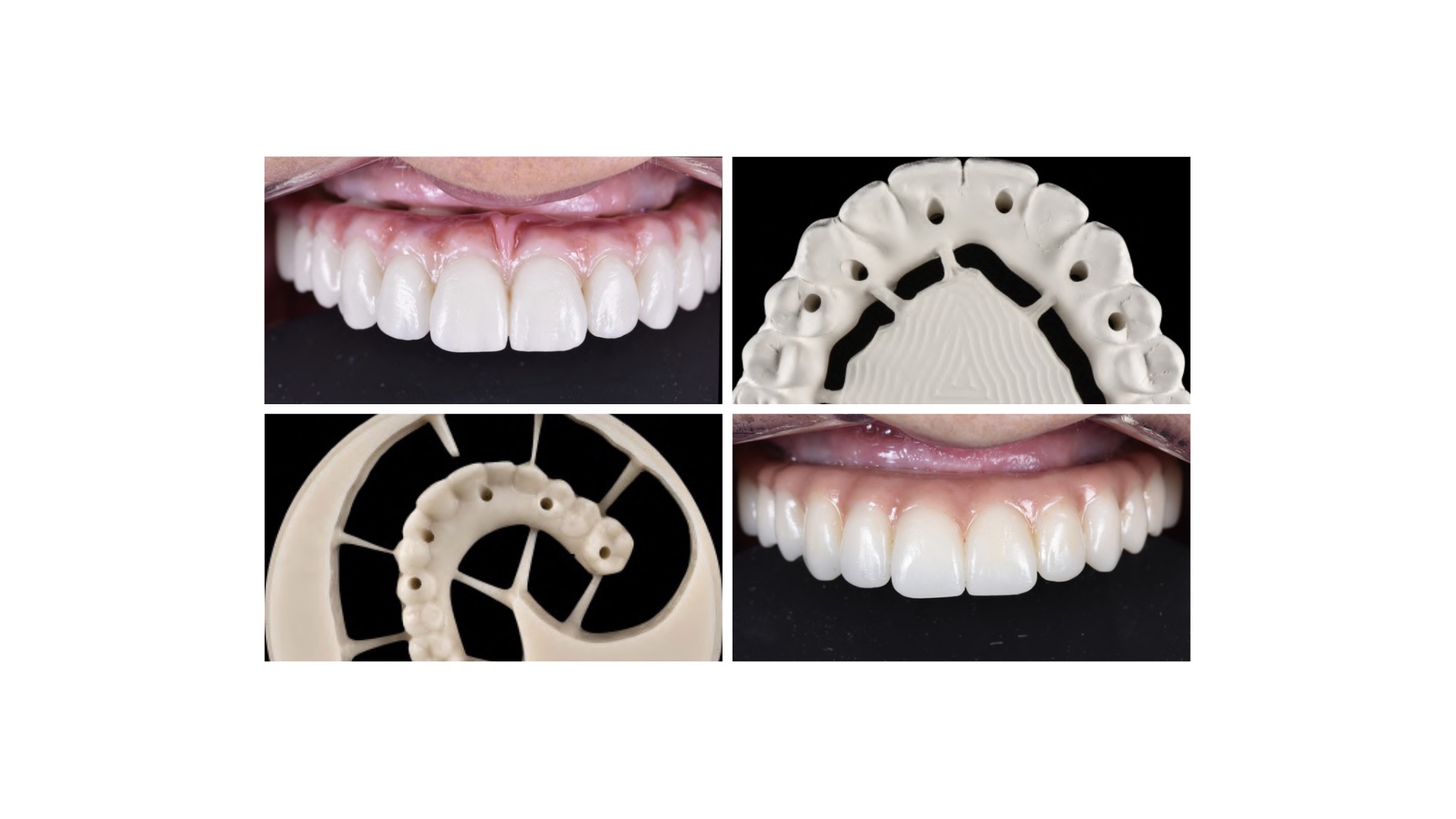
All-on-X is the same fixed-arch concept as All-on-4 — a full arch of teeth supported by implants — but with more implants in the plan (five, six, sometimes more, depending on the case).
The reason to go beyond four comes down to bone and bite. When a patient has more available bone, a heavier bite load, or a case that benefits from extra support at the implant level, Dr. Tarek recommends All-on-X. The procedure and recovery are similar; the difference is mechanical — more anchor points means more distributed load.
Not every patient needs All-on-X. Dr. Tarek determines the right count once he’s seen your 3D scan. Whether that takes four implants or six depends on your specific anatomy, not a preference. For the full-arch decision overview, read the Full Mouth Dental Implants guide.
Is All-on-4 Right for You? Candidacy Criteria
All-on-4 is designed for patients missing most or all teeth on a jaw — or with several failing teeth heading that way. The technique was developed specifically to work with patients who’ve experienced some bone loss, which is common after teeth have been gone a while.
Candidacy depends on a real assessment, not a general checklist. If you’ve been told elsewhere you’re not an implant candidate, it’s worth coming in — the angled-implant design was developed precisely for patients previously told no due to bone loss. Bring any scans or notes; Dr. Tarek gives you a straight second opinion.
- Bone volume and density — angled implants engage well-preserved areas
- Gum health — active gum disease addressed before placement
- Overall health — diabetes, blood thinners factor into timing
- Final-teeth goals — acrylic temporary vs. zirconia final arch
The Procedure: What Happens on Your Surgery Day
You arrive for your scheduled appointment. We administer local anesthesia — most patients also choose some level of sedation, planned in advance. Any remaining failing teeth are removed. The four implant posts are placed into the jawbone in their planned positions. A fixed temporary arch — a full set of teeth — is fitted and secured the same visit.
Most patients go home the same day with a complete set of teeth. The temporaries are functional; you can eat soft foods while the implants heal. Over the following three to six months the implants integrate with the jawbone. We monitor you during this period, then place the final arch — for the most durable result, typically zirconia. Recovery typically involves swelling and soreness the first week; most patients are functioning on temporaries within days. Individual recovery varies.
About the implants. Dr. Tarek works with TRI (Swiss, no separate abutment required), BioHorizons (American-made; the only system with Laser-Lok technology, which supports soft-tissue attachment directly to the implant), and Nobel Pearl (all-ceramic, for patients with a thin tissue type where ceramic performs better for gum health and long-term appearance). He explains which system fits your anatomy at the consult.
Warranty. Full-arch cases at Westlake carry a 5-year warranty on material failure. It applies to patients who complete the recommended 6-month Care & Cleaning visits. Smokers, patients with uncontrolled diabetes, and patients who skip the follow-up schedule are excluded — these conditions affect implant healing and long-term stability.
- Anesthesia. To start the process, you will be put under anesthesia. This is so that you will not feel any pain throughout the procedure, and can lay comfortably without being anxious.
- Teeth removal. Some patients will already have their teeth missing. However, for those individuals that need a few teeth removed before the implants can be put in, this is the next step.
- The incision. An incision will now be made where the titanium alloy screws will go. Typically, a dentist will put two screws in the front of the mouth, and 2 screws (1 on each side) in the back. This guarantees good stability.
- Screwing the implants in. The screws will then be put into their appropriate spot. Here, they will begin to fuse with your jawbone over the span of a couple of months.
- Crown implementation. Once the healing process has come to an end, your dentist will put on permanent, porcelain crowns. This will cover up the titanium alloy rods and look similar to your natural teeth! When it comes to all-on-4 treatment, many crowns may be connected and all supported by a single titanium alloy rod.
All-on-4 Cost and Financing in Sterling, VA
All-on-4 is a full-arch procedure — four implants, a temporary arch, and a final restoration — and the cost reflects that scope. It’s a real investment, and Dr. Tarek is direct about that.
Cost varies based on whether bone grafting is needed, how many teeth need extraction, and the final restoration material (acrylic vs. zirconia). We give you a specific, itemized number at the consult — not an estimate that shifts later. Monthly payment plans and major financing partners make it possible to spread the cost over time. If cost is the piece you’re most concerned about, the dedicated Dental Implant Financing page covers the options in detail. Estimates vary; we provide a detailed quote after assessment.
The consult is where Dr. Tarek looks at your scans, tells you whether you’re a good All-on-4 candidate, and gives you a real number for your case. Free consult. Straight answers. Real numbers. Westlake Dental · Sterling, VA.
All-on-4 Questions, Answered
For most All-on-4 patients, yes. We place a fixed temporary arch the same day the implants go in, so you leave with a complete set of teeth. Whether same-day temporaries apply to your case depends on your bone and the surgical findings — Dr. Tarek confirms this during planning, not after you're in the chair.
From surgery to final arch typically runs four to six months, because the implants need time to integrate with the bone. Simpler cases or ideal healing run shorter; grafting needs or slower healing run longer. You're functional on temporaries the whole time. Actual timeline depends on your specific case.
Both use the same fixed-arch concept — a complete set of teeth anchored by implants. All-on-4 uses four implants. All-on-X uses more (five, six, or more) when the case calls for extra support, more bone volume, or a heavier bite load. Dr. Tarek determines the right count from your 3D scan at the consult.
Often yes. All-on-4 was developed specifically for patients with some bone loss — the two angled back implants are positioned to engage areas where bone is typically better preserved. This is precisely why some patients turned away elsewhere are good candidates here. Bring any prior scans and Dr. Tarek gives you a straight assessment.
The temporary arch placed on surgery day is typically acrylic. The final arch can be acrylic or zirconia. Zirconia is stronger, more stain-resistant, and tends to look more natural over time — the choice for patients who want the most durable long-term result. Dr. Tarek discusses both at the consult. Learn about zirconia full-arch implants.
I’ve had excellent care for years. Dr. T is great at explaining everything, making it less stressful, and making sure you feel comfortable. Everyone is friendly and service is prompt. I would recommend Westlake Dental Care to anyone.
– Margie W.
Potomac Falls, VA
Ready to See If All-on-4 Is the Right Move?
Dr. Tarek looks at your scans, tells you whether you're a good candidate, and gives you a real number. No guesses, no pressure.
OUR BLOG
Learn About Dental Health and Our Practice
When it comes to replacing missing teeth, you have several options to consider. Two of the most popular choices are […]
Dental implants have become the go-to solution for replacing missing teeth, offering unparalleled durability, functionality, and aesthetics. However, many patients […]

Dental implants can be a significant investment, so most patients want them to last as long as possible and keep them […]