
Digital dentistry — Sterling, Virginia
The errors happen on the computer, not in your mouth
Most of what people call dental technology is a machine in the corner of the room. The part that changes your visit is not the machine. It is that your mouth gets copied into a model first, and every decision gets argued with on that model before anyone touches a tooth.
The mechanism, not the sales pitch
What a digital record actually changes
A scan builds a three-dimensional copy of your teeth and gums, accurate to a fraction of a millimetre. That copy can be rotated, measured, and cut apart on screen. It can also be compared against a scan taken a year later, which is how we can show you that a worn edge is moving rather than telling you it might be.
The older way was an impression: a tray of putty, held still, then poured into stone. It worked, and it was one attempt. If the material moved, or a bubble formed at the margin, nobody found out until the restoration did not seat. A scan that goes wrong is visible immediately and re-taken in seconds.
Why it matters between appointments
The bigger change is not in the room with you. The model can be planned on — where a crown margin sits, how an implant angles against the nerve, how much tooth a veneer needs. When that planning is wrong, it is wrong on a screen, and it costs a click to fix.
That is the whole argument for working this way. The errors happen on the computer, not in your mouth.
From scan to finished plan
How a visit runs
- 01
The scan
A small wand moves around your teeth and builds the model as it goes. No tray, no putty, no gagging. You watch it appear on the monitor beside you.
- 02
The images
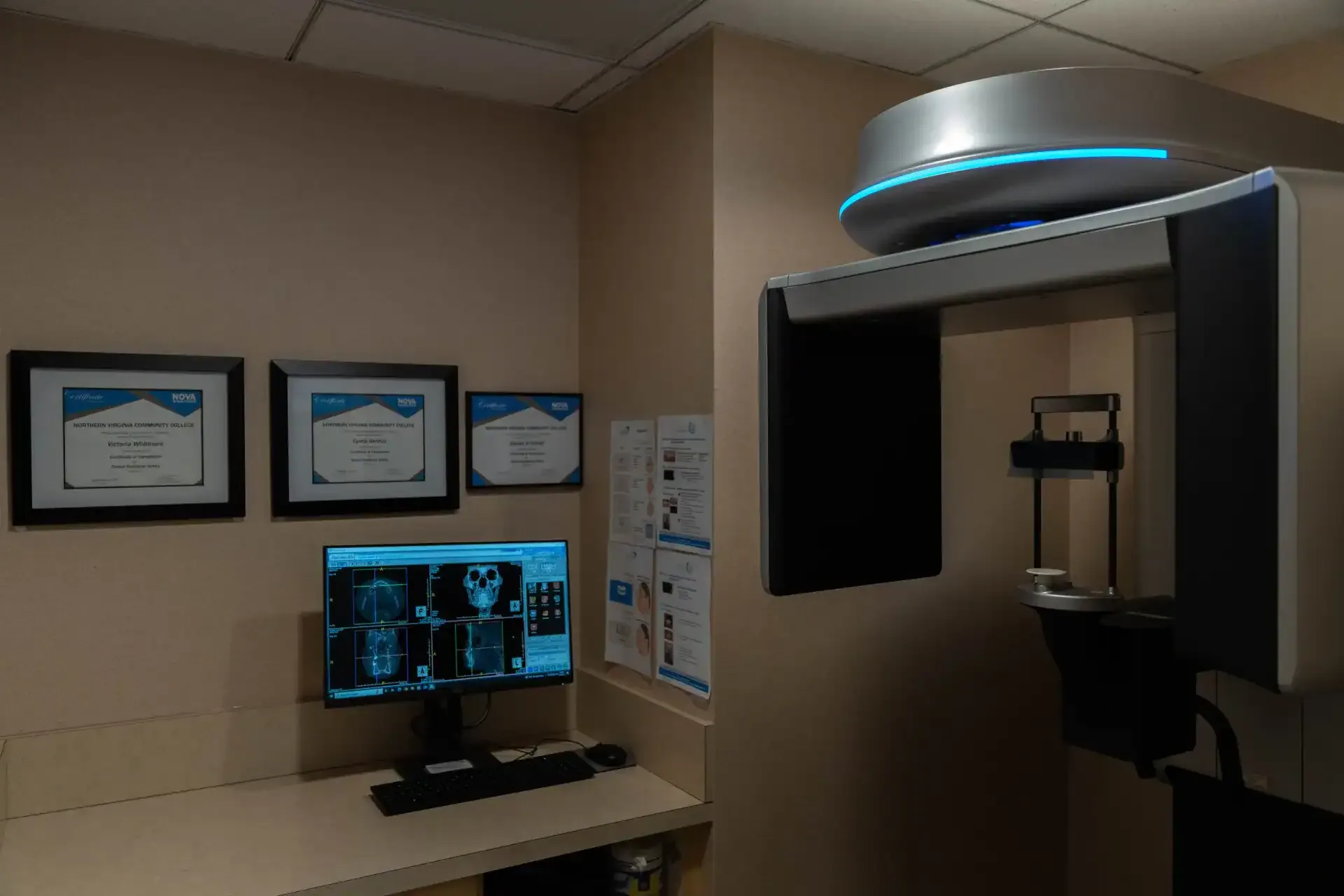
Photographs, and a low-dose three-dimensional x-ray when the treatment needs one — implants and difficult roots do, a single filling does not. We do not take images we cannot act on.
- 03
The planning
Your model is measured and the treatment is laid out on it. For a crown that is minutes. For an implant or a full-mouth rebuild it happens between appointments, and it is where most of the thinking goes.
- 04
The conversation
You see the same screen we do. Dr. Tarek walks through what the model shows and what the options are, and you leave with the plan in writing.
What the exam is actually looking at
Before anything is decided
The scan answers what shape your teeth are. It does not answer why they got that way, and that is the question that decides treatment.
So the exam looks at how your teeth meet, whether one is taking more force than it should, what your gums are doing at the margins, and what previous dentistry is holding. A worn front tooth is a symptom. Whether it is wear from grinding, from an edge-to-edge bite, or from acid changes what fixes it.
When that is understood, the model stops being a picture of your mouth and becomes something you can plan on.
The part nobody quotes you
What this costs you
Nothing extra. Scanning and digital planning are how this practice works, not an upgrade offered at the desk. There is no line on your treatment plan for the technology.
One thing does carry a cost: a three-dimensional x-ray, and only when the treatment genuinely needs one. Implant planning, a root that is not behaving, and a wisdom tooth near a nerve are the usual reasons. You hear that cost before it is scheduled, never after.
How most guests pay
Financing partners are on financing options, and the Membership Club covers preventive care for guests without insurance.
Where our scope ends
What this does not do
A scan is a record of the surface. It shows shape, wear and how teeth meet, and it shows nothing underneath — decay inside a tooth, bone level, an abscess at a root tip. Those need x-rays, and a practice that offers to plan your mouth from a scan alone is skipping the half that finds problems.
It also does not make a treatment plan by itself. The model is the surface we argue on. The judgement about what your mouth needs is still a dentist looking at you.
We do not offer teledentistry — no remote assessment from photographs you send in. Some things need a person in the room.
Questions guests ask
Next step
Come and see your own model
The scan is part of a normal examination here, so the fastest way to understand any of this is to sit in the chair and watch your own mouth appear on the monitor.