
Night guards · Sterling, VA
A night guard does not stop you grinding
It moves the wear onto something you can replace, and that is the whole mechanism. Almost no page about night guards says it out loud.
Understanding that changes what you expect from one. It explains why a guard wears out, why the fit decides whether it helps, and why the grinding still needs looking at.
The mechanism
What grinding does, and what a guard changes about it
The force is the problem, not the contact
Chewing loads your teeth in short bursts against food that gives way. Grinding loads them tooth against tooth, for long stretches, at forces well above anything a meal produces.
Most of it happens while you are asleep, when the reflexes that would stop you biting that hard while awake are not doing their job.
Enamel does not grow back
Enamel is the hardest tissue in the body, and it contains no cells. That is why it cannot repair itself, and why what gets ground away does not come back.
Once the enamel is through, the dentin underneath wears several times faster, and a slow problem becomes a fast one. Flattened front teeth or a sensitive molar are worth acting on rather than watching.
What the guard actually does
A guard puts a layer of hard acrylic between the upper and lower teeth. You still clench. You still grind. The force still happens.
But it is now being absorbed by a piece of plastic that costs a fraction of a crown and can be remade. The guard wears down instead of your teeth. A guard with grooves worn into it is not a failed guard — it is a guard that did exactly what it was for.
Why the fit decides whether it helps
A guard is made from a scan of your own teeth. It seats on every tooth evenly and spreads the load across the whole arch.
A boil-and-bite guard from a chemist seats on whichever teeth it happens to touch. Concentrating a grinding force onto two or three teeth is worse than spreading it across all of them. A loose guard that shifts overnight can also let teeth drift.
The sequence
How a custom guard is made
- 01
We look at the wear first
Flattened edges, chips at the biting surface, sensitivity, a sore jaw in the morning, or a partner who hears it. The pattern tells us whether you clench, grind side to side, or both — and those wear differently.
- 02
We check what is driving it
Grinding is often linked to stress or to a disturbed night's sleep. If the history points at breathing during sleep, we will say so and suggest who to speak to. A guard protects teeth; it does not treat the reason.
- 03
We scan your teeth
A digital scan rather than a tray of putty, recording the shape of both arches and how they meet. That is what lets the finished guard seat evenly instead of rocking.
- 04
The guard is made to that scan
Thickness and coverage are chosen for how you actually grind. A heavy grinder needs a different guard from someone who clenches quietly.
- 05
We fit it and adjust it
It should sit firmly without pressure points, and your bite should meet evenly across it. Small adjustments at this visit are normal and are what stops a guard ending up in a drawer.
At the practice
The wear tells us more than the symptom does
Plenty of people who grind have no idea they do. There is no pain until enamel is already gone, and the first sign is usually something a dentist spots rather than something you feel.
So we look at the edges of your teeth, at how they meet, and at whether the wear pattern matches your bite. That is also how we tell grinding apart from acid erosion, which looks similar and has a completely different fix.
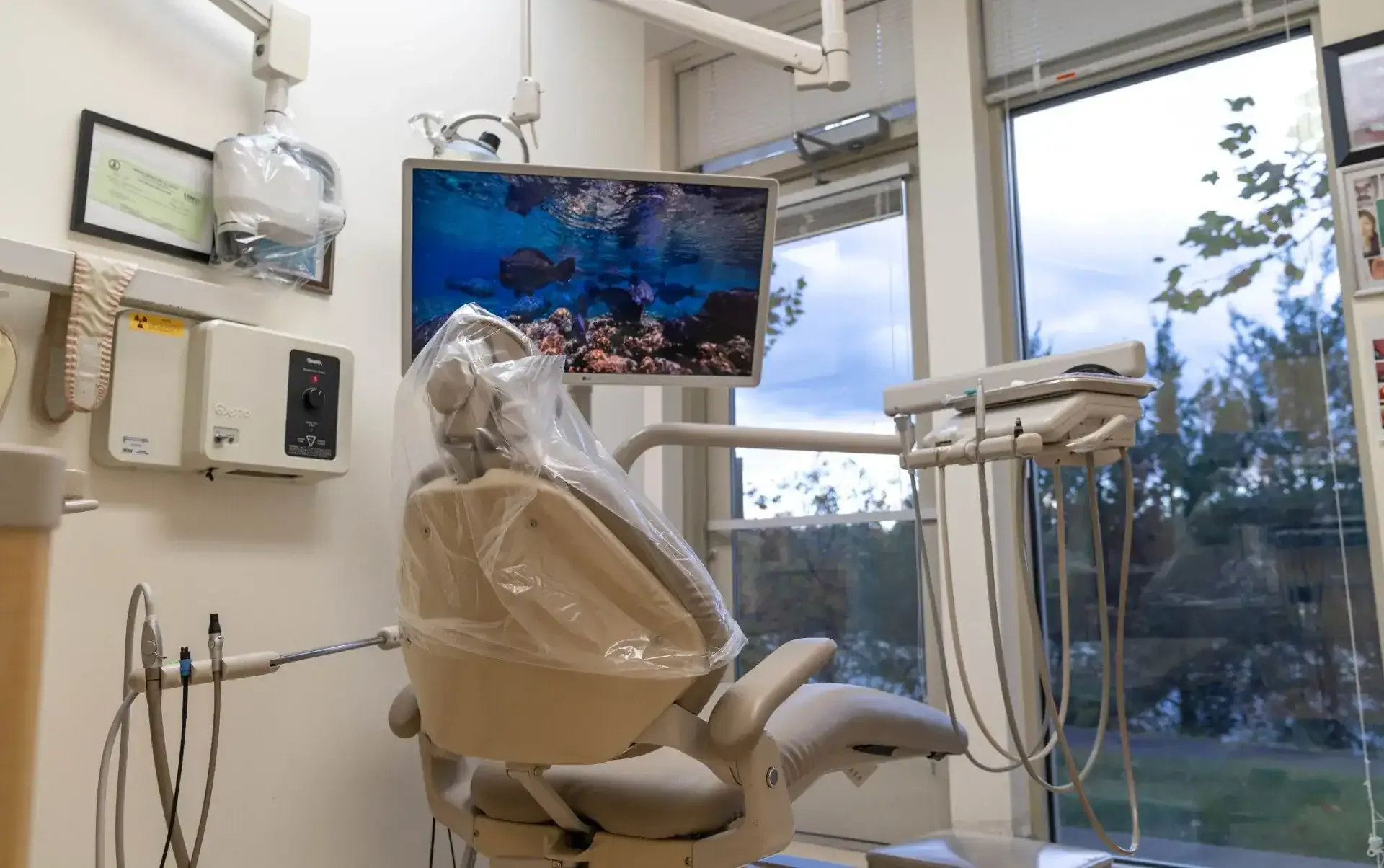
If you already have crowns, veneers or implants, the case for a guard gets stronger rather than weaker. Grinding is the most common reason cosmetic and restorative work fails earlier than it should.
Bring a guard you already own, and we can tell you whether it is doing anything useful.
What it costs
What you are paying for
A custom guard costs more than a chemist's boil-and-bite, and the difference is the scan, the material and the fitting appointment. What you are buying is even contact across every tooth, which is the part that decides whether it protects anything.
Set it against what it is protecting. A guard is a fraction of the cost of one crown, and heavy grinding rarely damages one tooth in isolation.
Many dental plans cover a share of an occlusal guard. We file insurance and will check your plan before it is made, so you know the number in advance.
How most guests pay
Financing partners are on financing options, and the Membership Club covers preventive care for guests without insurance.
Being straight with you
What a night guard will not do
It will not stop you grinding, and nothing you wear at night does. It protects the teeth while the habit carries on.
It will not repair teeth that are already worn down. Where enamel is gone, restoring it is a separate conversation, and a guard is what protects the new work afterwards.
It is not a sports mouthguard: those are built to absorb impact rather than grinding load, and the two are not interchangeable.
If your grinding is tied to how you breathe while asleep, a guard is not the treatment for that. We will tell you if the history points that way rather than fitting a guard and leaving it there.
Questions guests ask
Next step
Bring the wear in and we will read it
An exam tells us whether you are grinding, how hard, and whether a guard is the right answer for your bite. If you already own one, bring it — we will tell you whether it is doing anything.