
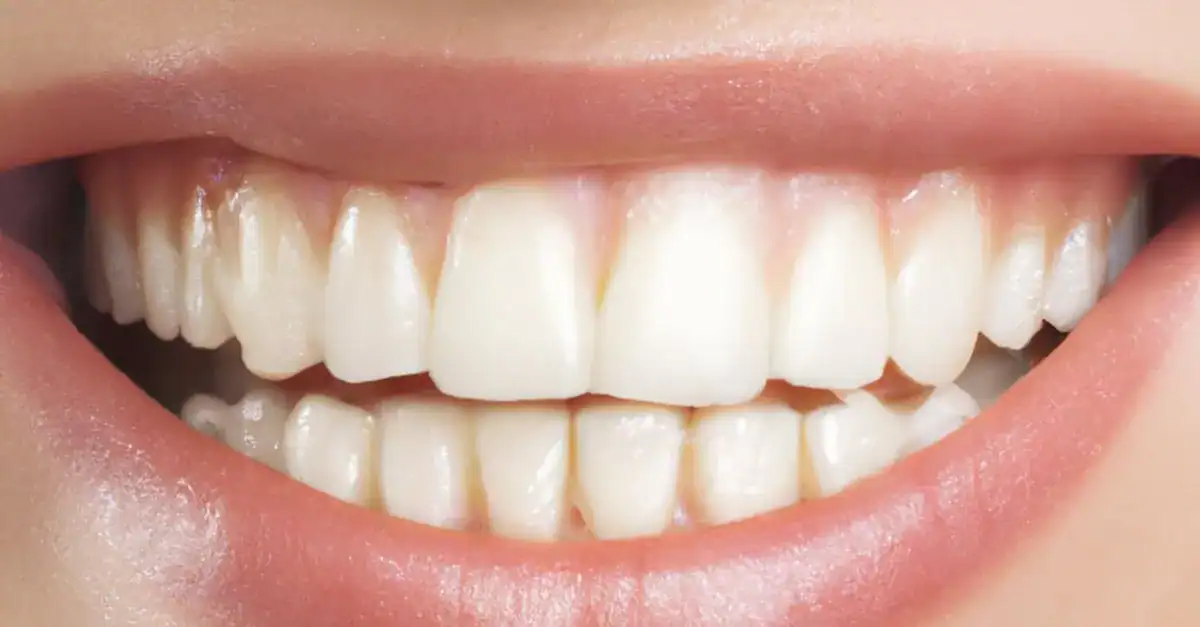
A box of whitening strips shows up in most bathroom cabinets at some point, usually after a sale or a friend's recommendation. Somewhere between the first use and the third, a question follows it. Is this actually doing something to my teeth, beyond making them look whiter? The honest answer starts with what the gel does inside a tooth, not what it does on the surface.
What the gel actually does
Whitening works because of one molecule: hydrogen peroxide, or its slower-release cousin, carbamide peroxide. On a tooth, that peroxide breaks down into oxygen. The oxygen does not stop at the surface. It travels through the enamel and into the dentin underneath, where years of coffee, tea, tobacco, and ordinary aging leave larger stain molecules sitting. Oxygen breaks those molecules into smaller pieces that reflect more light back at you, so the tooth reads as lighter.
That is the whole mechanism. Nothing scrapes off the tooth and nothing dissolves away. The color changes inside the tooth, not on it.
Strips are not a different technology, just a different fit
A whitening strip and the gel Dr. Tarek uses in the office run on the same chemistry, doing the same job. What changes between them is strength and, more importantly, how the gel stays in contact with your teeth. A strip is a flat sheet pressed on by hand.
A custom tray is different. It comes from an impression of your own teeth. It holds gel evenly against every tooth and off your gums, because it was built to that exact shape.
That difference in fit, more than the gel itself, is where most of the real gap between a strip and professional whitening comes from.
Why the two honest risks show up
Two things go wrong often enough to name plainly, and both trace back to the same fit problem.
Gum irritation happens when gel meant for enamel ends up sitting on soft tissue instead. A flat strip does not stop cleanly at the gum line the way a molded tray does. Gum tissue is not built to hold peroxide, and it usually answers with a burning or tender feeling. That feeling settles once the strip comes off.
Why sensitivity happens, and why it passes
Sensitivity happens for a different reason. The oxygen reaching your dentin also reaches the tiny tubules running through it, straight toward the nerve. That nerve reacts to temperature changes it would normally ignore.
Many people feel it as a jolt to cold air or cold water for a day or two after a session. It is typically temporary. It settles once the tubules calm down, which is a sign the chemistry is working, not a sign of harm.
The patchy result is mechanical, not bad luck
Teeth curve, and a strip does not. It presses hardest against the flattest part of each tooth and barely reaches the curved edges or the gaps between teeth. A tooth that sits slightly forward or back of its neighbors gets even less contact. A custom tray holds gel against the whole surface because it was molded to that same curve, gaps included.
So when someone says their strips left streaks or missed the edges near the gum line, that is not a strip used wrong. That is a flat product meeting a curved arch.
What no whitening product can touch
Whitening changes color inside natural tooth structure only. A crown, veneer, or bonded filling has nothing inside it for that oxygen to reach. Its color was set once in a lab, and it holds at that shade rather than collecting stain the way enamel does. That matters before you start whitening if a front tooth already carries any of the three.
Which stains respond and which do not
Everyday stains from coffee, tea, or aging respond well, because the pigment sits loosely in the dentin. Staining from childhood tetracycline use, or from too much fluoride during tooth development, sits differently — often bound deeper into the tooth structure. That kind of staining typically answers far less to any peroxide product, strip or professional. When whitening barely moves a stain after a full course, that is usually why.
Why we look before you whiten
A strip box does not ask what is happening in your mouth before it goes on your teeth. That is the real gap between a drugstore aisle and a dental visit. Whitening gel over a cavity that has already reached the nerve makes that nerve respond sharply.
Whitening gel over a root surface exposed by receding gums has no enamel left to filter it at all. Either case turns ordinary sensitivity into something worse. An exam catches both before the gel does. That is why in-office and take-home whitening at Westlake Dental Care both start with a look at your teeth, rather than a shade choice.
The honest verdict
Whitening strips are not bad for your teeth when used as directed. They are weaker than what we can put on your teeth. They are less even, because no one molded them to your mouth, and blind to whatever else is going on in it. For a small, temporary brightening job on teeth with no restorations and no history of sensitivity, that is often enough.
Where a strip stops being enough
Past that point, the tray and the exam start doing work a strip cannot. Deep staining calls for it. So does a front tooth carrying a crown you will need to match, or a mouth that has not been checked in a while. Whitening is sometimes one step toward a bigger plan — matching a crown, or moving toward veneers. Our complimentary Smile Reveal consult is where that plan gets mapped out first.
Book an appointment or call the office, and we will look at your teeth before you spend money guessing which box fits them.
More from the journal
- Same-Day Crowns: Which Teeth Qualify, Which Go to a LabMost single crowns on back teeth can be scanned, designed, milled and fitted in one visit.…
- Can Gum Disease Be Reversed? Gingivitis vs PeriodontitisGingivitis, which lives in the gums alone, can be reversed with professional cleaning and daily…
- Chipped Tooth: When Bonding Is Enough and When It Is NotThe size of the chip and where it sits decide the repair. A small chip in the enamel is…