If you have put off an implant because of the pain you imagine, you are in good company. The worry usually has two parts: what the surgery feels like, and how the days afterward go.
So, do dental implants hurt? For most people the surgery brings pressure rather than pain. The soreness afterward is real but fades over days, and experience varies from person to person. Here is the order it happens in.
Does the exam and 3D scan hurt?
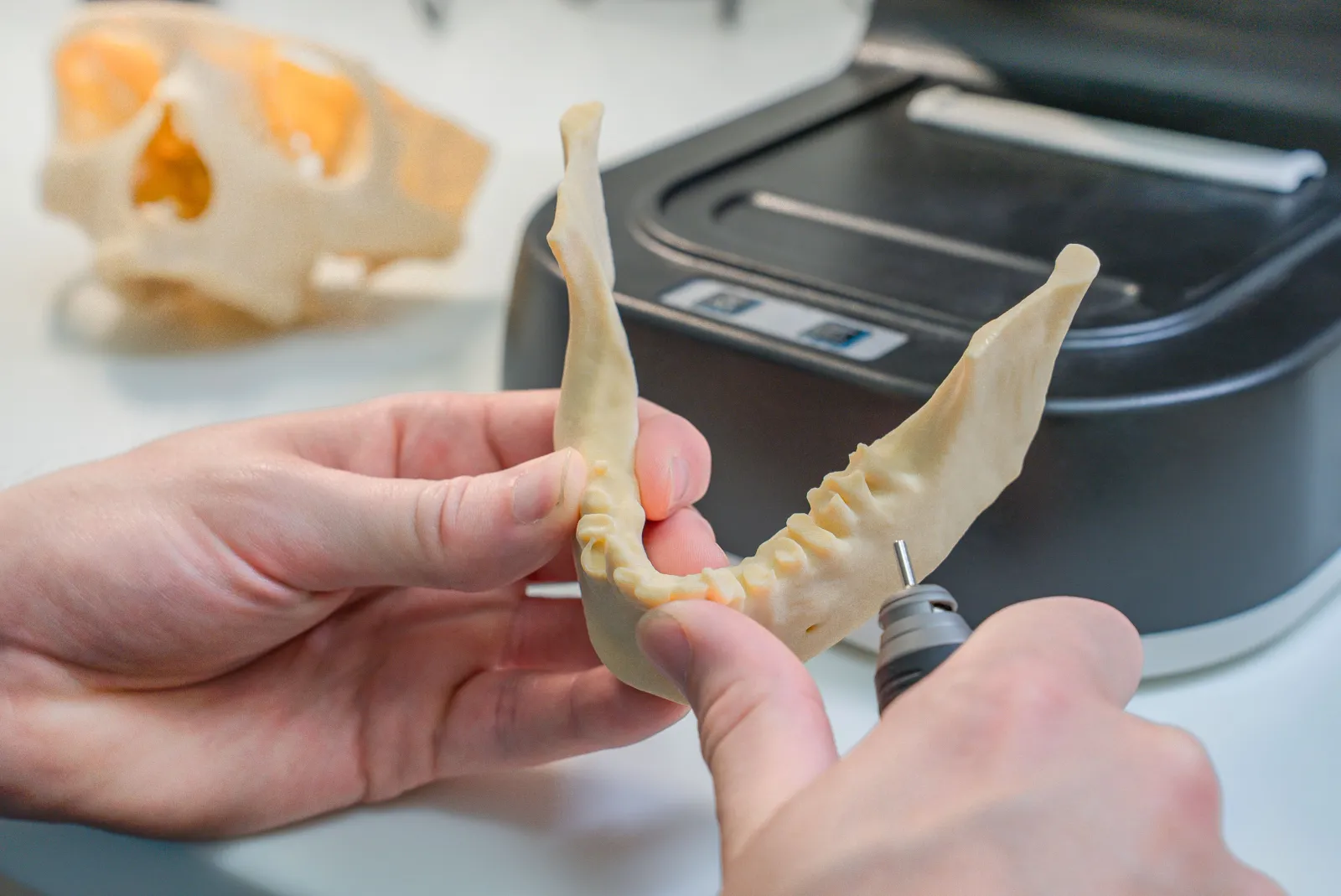
Before any surgery you have an exam and imaging: X-rays and a 3D scan of your jaw. The scan shows how much bone you have and where it sits, which is how the surgeon plans where the implant goes. There are no needles and no cutting in this part of the process, only pictures of what is already there. In a 2022 video on this question, Dr. Tarek says patients typically feel nothing from the X-ray or the scan.
Do you feel the implant going in?
The surgery happens under local anesthetic. First a numbing gel goes on the gum where the injection will go, so the needle is easy to miss. Then the surgeon injects the anesthetic and waits a few minutes until the area is fully numb. Only then does the surgery start.
The numbness works through a specific mechanism. Local anesthetic interrupts nerve signals by blocking the flow of sodium ions into the nerve. The fibers that carry pain are more sensitive to it than the ones that carry pressure. That is why you can feel the surgeon pushing on the gum and still feel no pain. The sharp signal is gone, and the pressure signal gets through.
Dr. Tarek says in the video that patients feel pressure and some vibration during drilling. The complaint he hears most from patients is about the water. A saline rinse sprays while the surgeon drills, to cool the area, and it can reach your face.
Does that match what patients report? A 2022 study in BMJ Open asked 366 people at a hospital implant clinic in Wuhan, China, about their pain during surgery. They scored it from 0 to 10. A total of 78.7% scored it between 0 and 3, which the authors call no to mild pain. That leaves about one in five who rated it higher.
If you feel anything sharp, say so right away so the surgeon can deal with it.
If lying awake through it is the harder part for you, sedation options are available here, so ask about them when you book. Our post on what sedation dentistry is and who it helps explains who it suits, and the sedation dentistry page covers the rest.
What does it feel like in the first few days?
Once the anesthetic wears off, the soreness you feel comes from healing. The surgeon opened the gum and prepared the bone, so the body sends fluid and inflammatory cells to the area. That produces swelling and tenderness, and both peak early and then ease.
The same BMJ Open study asked patients about discomfort on set days. The share reporting any discomfort fell from 57.7% on day 1 to 36.1% on day 3 and 17.5% on day 7.
A small survey of 40 patients tracked recovery for seven days. Swelling was the longest-lasting difficulty, and it became minimal after about five days. A 2021 review comparing implant placement with tooth extraction concluded that placement is less unpleasant, with less pain afterward.
A review of 11 randomized trials on pain medicines after implant surgery notes that pain is usually mild or moderate, with severe pain in some.
For the pain itself, Dr. Tarek says most of his implant patients take over-the-counter ibuprofen and acetaminophen that evening and need nothing stronger. That fits what the research on dental pain shows. A 2018 overview in the Journal of the American Dental Association found that ibuprofen with acetaminophen gave adults the most pain relief. Medicines containing opioids were among those linked most often to side effects. Which medicine you take and how much depends on your health history, so follow the plan the office gives you.
Does a bone graft make it hurt more?
It can. The BMJ Open authors found that bone augmentation procedures were one of the factors tied to more severe discomfort afterward. Age, alcohol use and how much pain someone felt during surgery were also on that list.
Our post on whether you need a bone graft before an implant covers when one is needed. Your surgeon will tell you at the exam whether your case includes one, and what that would mean for healing.
What pain means something is wrong?
Expected soreness eases as the days go by. Pain that builds after the first few days, when it should be fading, is worth a call to the office instead of waiting it out.
Cleveland Clinic's patient guidance on implants lists reasons to call your dentist. The list is a loose or wobbly implant, bleeding gums, fever, pus around the implant and swollen gums. It also names swollen lymph nodes in the neck, when they come with one of the others. Our post on bleeding after dental implants covers what normal oozing looks like in the first days. If something looks different from that, call the office instead of waiting.
What decides how much you will feel?
Your own case decides it. The BMJ Open study above tied more discomfort to bone grafting and to age, among other factors. That is why the first step is an exam and a 3D scan, so the surgeon can tell you what your plan involves. Our post on what to expect when getting dental implants walks through the visits. The dental implants page covers the options, and the oral surgery page explains the surgical side.
Book an appointment or call (703) 444-5108.
More from the journal
- Invisalign vs Braces: What Decides Which One FitsInvisalign vs braces comes down to how each one pushes teeth and how your bite is built. Here…
- What Happens at a Dental Implant Consultation?A dental implant consultation is a measuring and planning visit: your health history, an exam,…
- Dental Implants vs a Bridge: What Each One Asks of Your Other TeethA bridge borrows its strength from the two teeth beside the gap. An implant replaces the root…