
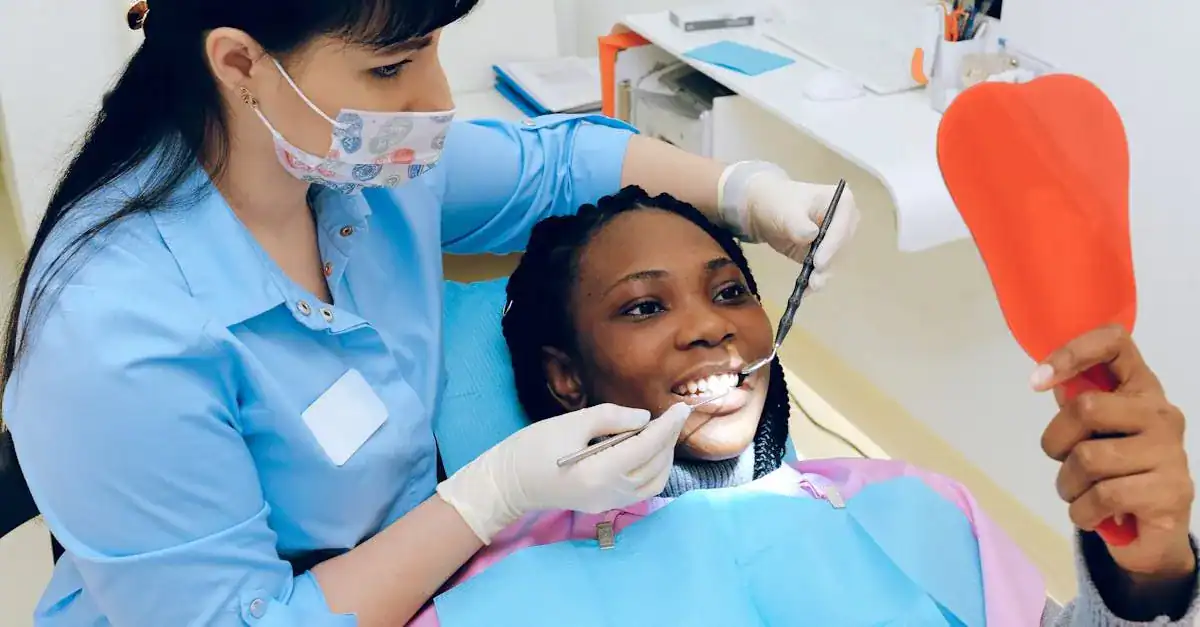
You are lying back, your mouth is open, and someone else's hands are the only ones doing anything. You cannot see what is happening, you cannot easily talk, and you are not sure how long it will go on. That combination, not the treatment itself, is what most people mean when they say they are afraid of the dentist.
The fear is usually about control, not pain
Pain is easy to picture and hard to actually predict, so the mind fills the gap with the worst version of it. What is harder to picture, and closer to the real feeling, is helplessness — being unable to stop something once it has started. That is a control problem, and control problems have a control-shaped fix.
A stop signal is a real transfer of control
The fix is a stop signal, agreed before anything begins: raise a hand, and we stop. Not slow down, not "just a second more" — stop, so you can talk, swallow, or simply catch your breath. It sounds small. It is not.
A stop signal moves the ability to pause the appointment from the person doing the work to the person it is being done to. You are no longer a passenger in your own procedure; you are the one holding the brake. Most people who use it once never need it again, because knowing it is there is usually the part that mattered.
The needle you are bracing for is not the first thing that touches you
Ask most anxious patients what they dread most, and the answer is the injection. Here is the part that usually gets left out: a numbing gel goes on the gum first, and sits there for a minute or two. By the time the needle touches that tissue, it is already numb to a touch that would otherwise register at all. What you are bracing for and what you actually feel turn out to be two different moments.
That gap between the fear and the mechanism is where anxiety usually lives. The mind rehearses the sharpest possible version of an event; the actual sequence is built, on purpose, to blunt exactly that version.
Comfort options exist, and they are discussed before anything else does
Beyond the stop signal and the numbing sequence, comfort options exist for patients who want more. What fits depends on your health history, the procedure, and what you actually want out of the visit. That conversation happens at the visit, before any treatment, with your full history in front of us. It is not a form you fill out. It is you saying what worries you, and us saying what fits.
The waiting room does more damage than the chair
If your appointment is midday, you spend the morning anticipating it. Then the waiting room finishes the job — every person called back ahead of you is another few minutes for dread to build.
A first-appointment-of-the-day slot skips most of that. You arrive, the door was just unlocked, and there is no backlog of other people's nerves to sit through. If mornings work for your schedule, ask for the first slot. It costs us nothing to offer, and it removes a real part of the problem before you are even in the chair.
A first visit can be nothing but a conversation
Nobody is required to accept treatment the same day they walk in. Tell us upfront that you want a look and a conversation and nothing else today, and we will hold to it. An exam, a set of images if needed, and a plan you take home to think about. No drill, no surprises, nothing decided on the spot.
For someone who has stayed away for years, that alone is often the only version of "going to the dentist" that feels possible at first. It is enough to get you back in the door for the second visit.
Bring someone, if that helps
A friend or family member in the waiting room is a normal thing to ask for. Some procedures allow them in the room with you, too. It changes nothing about the treatment itself, and it can change how the hour feels.
Where to start
None of this requires you to describe your fear in detail before you have even met us. Tell us as much or as little as you want, at whatever pace works. If avoiding the dentist has cost you years, one visit will not undo that on its own. What it can do is go exactly the way you asked for it to go.
Talk to us first, and we will build the appointment around what you need it to look like before we book anything else.
More from the journal
- Same-Day Crowns: Which Teeth Qualify, Which Go to a LabMost single crowns on back teeth can be scanned, designed, milled and fitted in one visit.…
- Can Gum Disease Be Reversed? Gingivitis vs PeriodontitisGingivitis, which lives in the gums alone, can be reversed with professional cleaning and daily…
- Chipped Tooth: When Bonding Is Enough and When It Is NotThe size of the chip and where it sits decide the repair. A small chip in the enamel is…