
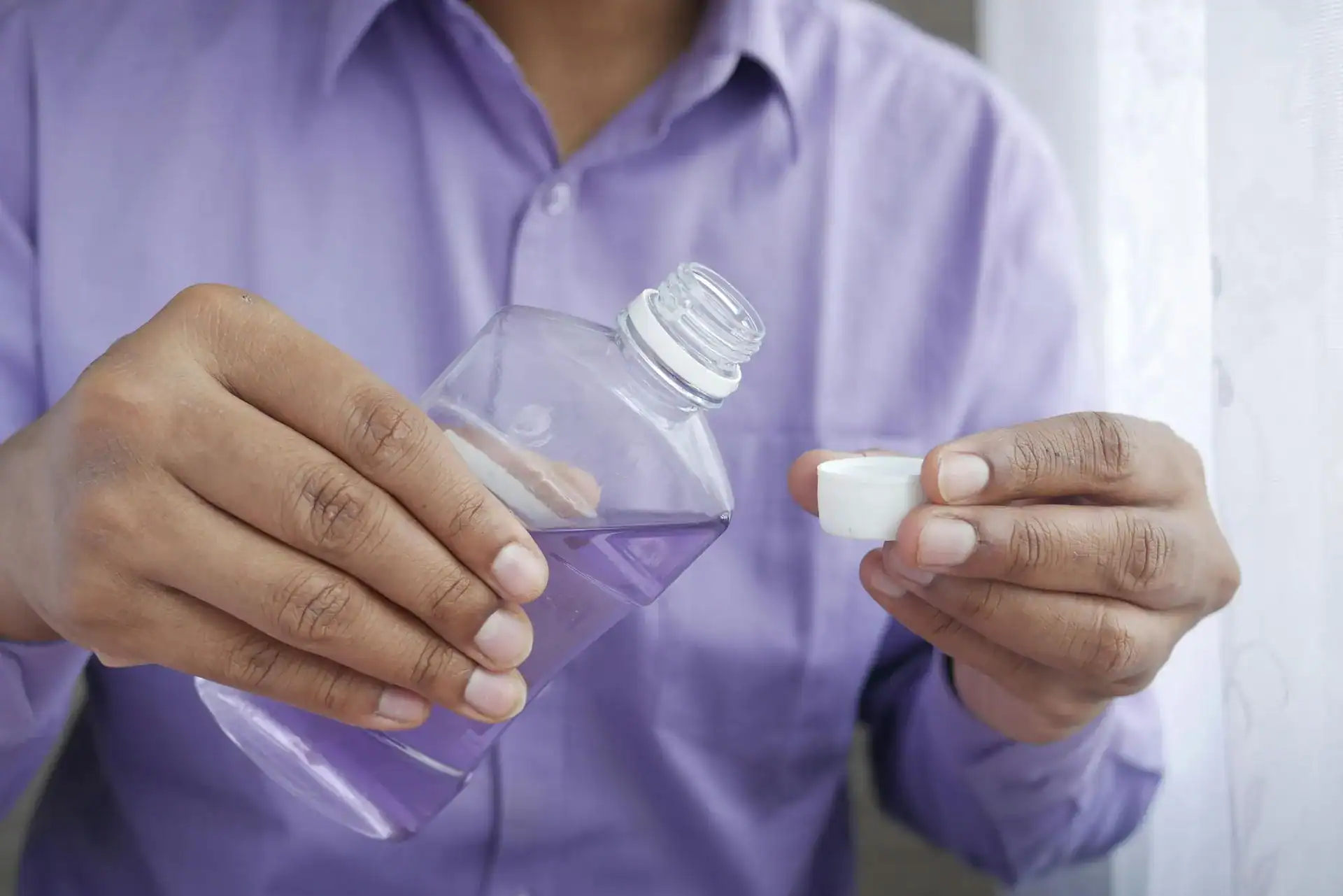
The bottle in your bathroom claims it kills 99% of germs, and that sounds like a goal worth having. Then a headline turns up linking mouthwash to high blood pressure, and the same bottle starts to look like the opposite of health. Both claims describe the same swish. Neither one tells you which mouthwash, or what it does once it reaches the bacteria living in your mouth.
What lives in a healthy mouth
Your mouth holds hundreds of species of bacteria, and most of them are not the problem. A working population sits in a thin layer called biofilm, coating the teeth, the cheeks, and the back of the tongue. Plaque is the harmful version of that same layer, thickened past the point your saliva and toothbrush can manage alone. The difference between plaque and a healthy biofilm is not bacteria versus no bacteria — it is which bacteria, and in what balance. That balance is also where gum disease gets its start once it tips too far.
The bacteria your body actually needs
A specific group of bacteria lives on the back of your tongue. It takes nitrate from foods like leafy greens and beets and converts it into nitrite. Your body then turns that nitrite into nitric oxide, the molecule that relaxes blood vessel walls and helps keep blood pressure in a normal range. This step happens in your mouth rather than your gut, because stomach acid destroys nitrate before your intestines get a chance to use it. Wipe out that bacteria and you interrupt a step your circulatory system depends on.
Why this shows up in blood-pressure headlines
That is the real story behind the mouthwash-and-blood-pressure headlines. It also explains why "kills 99% of germs" is an odd thing to want from something that sits in your mouth twice a day.
Not every mouthwash is doing the same job
A supermarket antiseptic rinse, built around alcohol or a broad-spectrum ingredient, does not separate the bacteria behind bad breath from the bacteria that reduce nitrate. It reduces the whole population at once.
The rinses that do have a job
A fluoride rinse works on a different principle. It does not aim to kill bacteria at all. It leaves a coating of fluoride on the enamel, helping the tooth take up minerals from saliva and resist acid.
Chlorhexidine is different again. It is a prescription-strength antiseptic we send home after specific procedures, such as gum surgery or an extraction, for a short, defined course. The goal for that window is a sharp drop in bacterial numbers while the tissue heals. That strength helps for a few days after surgery. The same strength is the wrong habit for every ordinary day after that.
Biofilm rebuilds faster than most people expect
Eating, drinking, and brushing already strip away part of that layer throughout the day. It starts rebuilding on its own within hours, no matter which rinse you used. One swish of an antiseptic mouthwash does not sterilize your mouth for the day — it knocks the population back, and your mouth restocks itself.
The concern with chlorhexidine and nitric oxide is not one dose. It is a bottle of it used every morning for years. That pattern keeps the nitrate-reducing bacteria suppressed instead of letting them return to their usual numbers.
One habit that undoes the fluoride you just applied
There is a second, unrelated way mouthwash can work against your routine. Right after brushing, a thin layer of fluoride sits on your teeth. It keeps strengthening the enamel for roughly the next half hour. Rinsing straight after brushing, with mouthwash or even plain water, washes that layer away before it finishes the job. If a fluoride rinse belongs in your routine, use it at a different point in the day, not back to back with brushing.
What we actually recommend
We do not start every guest on a daily antiseptic rinse. Most people keep a healthy mouth with brushing, flossing, and regular cleanings. Layering a strong rinse on top of that routine does more to the bacteria you want than the bacteria you do not.
A fluoride rinse earns a place for guests who run a higher risk of cavities, timed apart from brushing rather than stacked onto it. Chlorhexidine leaves our office only as a short prescription tied to a specific procedure, with a stop date attached, never as an everyday habit.
Where to start
If you already rinse with an antiseptic mouthwash every day, mention it at your next cleaning. That matters most if blood pressure is something you or your doctor already watch. We will look at what is actually in the bottle and whether it belongs in your routine at all. Book a visit or call the office at (703) 444-5108, and bring the question with you.
More from the journal
- Same-Day Crowns: Which Teeth Qualify, Which Go to a LabMost single crowns on back teeth can be scanned, designed, milled and fitted in one visit.…
- Can Gum Disease Be Reversed? Gingivitis vs PeriodontitisGingivitis, which lives in the gums alone, can be reversed with professional cleaning and daily…
- Chipped Tooth: When Bonding Is Enough and When It Is NotThe size of the chip and where it sits decide the repair. A small chip in the enamel is…