
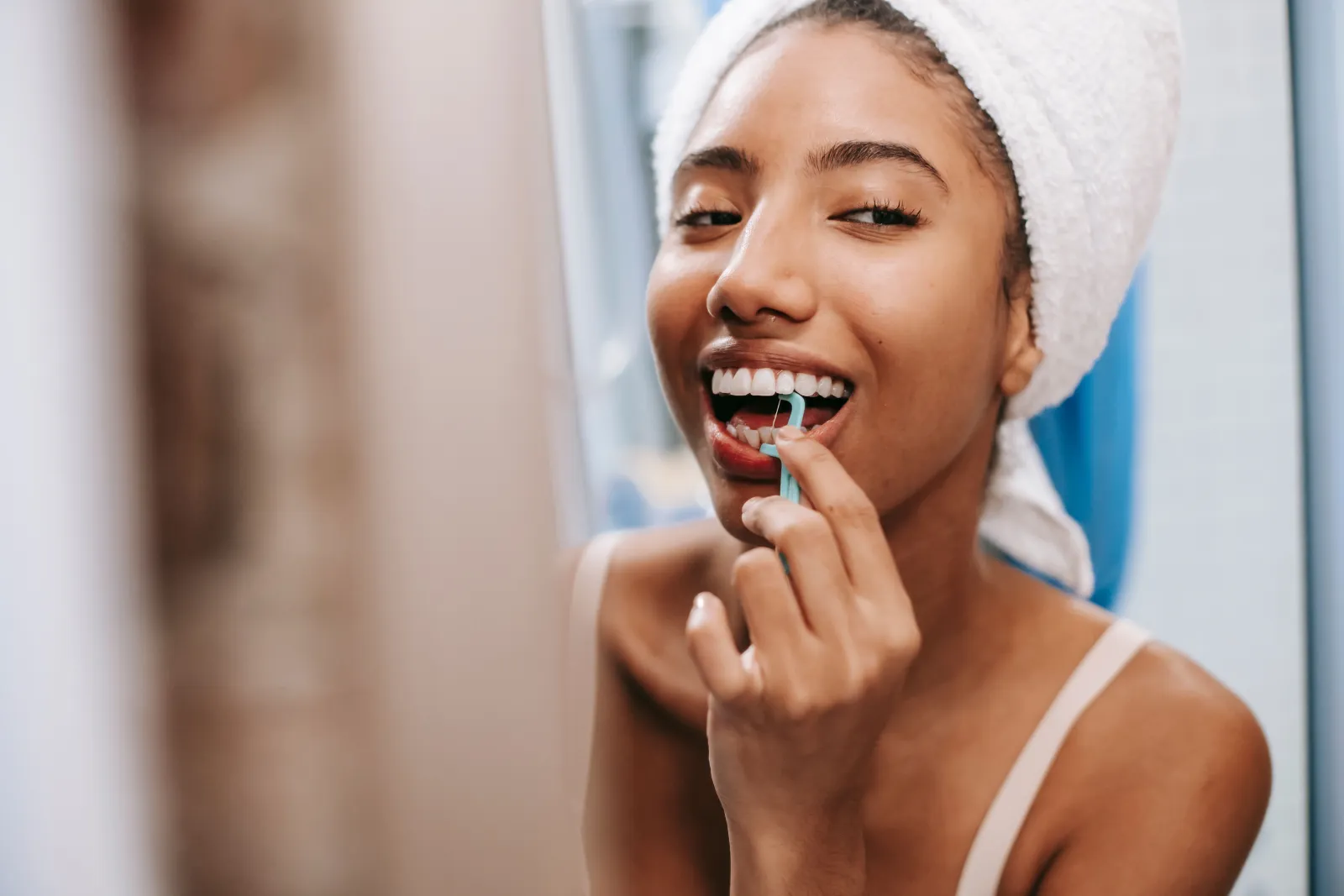
Maybe you read the 2016 headline saying flossing had never been proven to work, and quietly stopped. Or you floss the week before a cleaning and your gums bleed. Either way, the question is fair: is flossing necessary if the science behind it is so thin?
Cleaning between your teeth is necessary, and floss is one way to do it. The studies behind flossing are weak because of how they were run, not because they showed it does nothing. What matters is that something reaches the spaces between your teeth every day, because your toothbrush does not.
What did the 2016 flossing headlines actually find?
In August 2016 the Associated Press reported that the latest federal dietary guidelines had dropped their flossing advice. The AP story looked at 25 studies comparing brushing alone with brushing plus floss. It called the evidence "weak, very unreliable." Most of the studies dental groups cited as proof used outdated methods or tested few people. Some lasted only two weeks, and one tested 25 people after a single use of floss.
The government also acknowledged to the AP that flossing's effectiveness had never been researched, as the guidelines required. The president of the American Academy of Periodontology, quoted in the story, acknowledged the weak evidence and the brief length of many studies. Later that August, the U.S. Department of Health and Human Services told the ADA that flossing is "an important oral hygiene practice".
Since then, a 2019 Cochrane review has pooled 35 trials and 3,929 adults. It concluded that floss or interdental brushes, used on top of brushing, may reduce gum inflammation or plaque more than brushing alone. The authors graded that evidence low to very low certainty.
Is flossing necessary if the evidence is weak?
Start with how long those trials ran and what they measured. The Cochrane trials had to run for at least four weeks, and most measured results only in the short term. The AP itself noted that two weeks is far too short for a cavity or dental disease to develop.
So the trials measured plaque scores and gum bleeding instead. Not one of the 35 measured cavities between the teeth. Most did not measure periodontitis, the stage of gum disease that destroys the bone around a tooth. The authors called for future trials that run long enough to measure both.
Two more limits matter. Most people in the trials started with only mild gum inflammation, so there was little left to reduce. And nobody can hide from a person whether they are flossing, which the reviewers counted as a high risk of bias.
A short trial on healthy gums can only show a small effect. It cannot show whether cleaning between your teeth protects them over decades. That is the question you are actually asking, and the trials in the review were not built to answer it.
What does a toothbrush miss between your teeth?
Plaque is a sticky film of bacteria that forms on your teeth every day, and it comes off when something scrubs it loose. A toothbrush does that well on the front and back of each tooth. As the Cochrane authors put it, brushing cleans those outer and inner surfaces, and separate devices exist to reach the space between teeth.
Neighboring teeth touch at a contact point, and a small triangle of gum fills the space below it. The bristles sweep across that gap rather than into it, so plaque tucked in there sits undisturbed, day after day.
Left in place, it inflames the gum beside it. That is gingivitis, and the National Institute of Dental and Craniofacial Research (NIDCR) lists its first signs as red, swollen gums that bleed. Plaque also hardens into tartar, which only a dental team can remove. So gums that bleed when you floss are telling you the inflammation is already there.
If the inflammation continues, it reaches the bone that holds the tooth. NIDCR says early gum disease can often be reversed by daily brushing and flossing. A 2015 periodontology consensus report calls periodontitis irreversible. Our post on whether gum disease can be reversed explains that line.
Decay on the sides where teeth touch is also hard to spot in a mirror, which is why a checkup looks for it with X-rays. Our post on stopping an early cavity without a drill covers what happens when one is caught early.
Floss, interdental brushes or a water flosser: which reaches best?
Each one suits a different kind of gap, and the trials found different things for each.
Floss
Floss is a thin thread, so it slips between teeth that touch tightly. Move it up and down the side of each tooth, not back and forth. The periodontology president in the AP story said many people use it incorrectly, in a sawing motion.
Interdental brushes
These are small-headed brushes that the ADA describes as coming in a range of sizes to match the space between teeth. In the Cochrane review they may have reduced gum inflammation more than floss at one and three months, on low-certainty evidence.
Water flossers
A water flosser pushes a stream of water between the teeth. In the Cochrane trials it may have reduced gum inflammation at one month, on very low-certainty evidence, but not at three or six. It also removed no more plaque than brushing alone.
What the specialists recommend
The 2015 periodontology workshop drew a clear line. It named interdental brushes the device of choice and kept floss for healthy, tight spaces where a brush cannot pass without injuring the gum.
So the honest answer depends on the gaps in your own mouth. Tight contacts suit floss, and larger gaps suit a brush of the right size. A water flosser is an option if you will not use either, but the Cochrane authors called its evidence limited and inconsistent. The ADA recommends cleaning between your teeth once a day, with floss or another interdental cleaner.
An implant has gaps beside it too. The ADA notes that interdental brushes made for implants have coated wire so they do not scratch them. Our post on chewing gum with dental implants covers other everyday habits around an implant. The 2015 workshop treats rinses as an add-on to this cleaning, not a replacement. Our post on the trouble with mouthwash explains what rinses do.
How can you tell whether your routine is working?
At a checkup, the dental team slides a thin ruler called a probe between gum and tooth and measures how deep that space goes. NIDCR puts healthy pockets at 1 to 3 millimeters. Dr. Tarek treats 3 millimeters as the healthy baseline, 4 as the start of disease, and 5 or more as a concern.
A trial reports an average across many people, and these numbers measure your own mouth. If the readings between your teeth stay at 3 or under and the bleeding stops, your routine is reaching the right places. If one spot keeps bleeding or reads deeper, something is not reaching it, and that is the spot to ask about.
Scrubbing harder with your toothbrush does not make up for a missed gap. Dr. Tarek counts brushing harder among the common mistakes he sees in patients. It wears away enamel, and enamel does not grow back.
What should you do next?
Choose one tool you will actually use every day. At your next cleaning, ask which type or size fits your gaps, and ask for your pocket readings so you can compare them next time. Checkups are part of our general dentistry care. If the numbers show disease, our page on gum disease treatment explains how we treat it.
To find out where your gums stand, book an appointment or call (703) 444-5108.
More from the journal
- Do You Need a Bone Graft Before a Dental Implant?You need a bone graft when the jawbone where the tooth was is too thin or too short to surround…
- Same-Day Crowns: Which Teeth Qualify, Which Go to a LabMost single crowns on back teeth can be scanned, designed, milled and fitted in one visit.…
- Can Gum Disease Be Reversed? Gingivitis vs PeriodontitisGingivitis, which lives in the gums alone, can be reversed with professional cleaning and daily…